_edited.png)

Flying Safaris in Africa
See Africa from above
Africa is enormous.
The distances between some of its greatest wilderness areas can be measured in hundreds or even thousands of kilometres. A flying safari changes the way you travel through that space. Instead of spending hours on long road transfers, you can take to the air and arrive directly into the wilderness.
One moment you’re leaving a city or international airport. A short while later, you’re flying over endless bush, rivers, floodplains or desert before landing on a remote airstrip. Below you might see elephants moving through the landscape, herds of antelope crossing open plains or the winding channels of the Okavango Delta. Then the aircraft touches down and your safari begins.
For many travellers, the journey becomes part of the adventure.
What is a flying safari?
A flying safari uses small aircraft to connect safari camps and remote wilderness areas. Rather than staying in one region and travelling everywhere by road, you can link several destinations by air.
For example:
Cape Town → Greater Kruger → Victoria Falls
or:
Maun → Okavango Delta → Chobe → Victoria Falls
or:
Nairobi → Maasai Mara → Lamu
or:
Arusha → Tarangire → Ngorongoro Crater → Serengeti → Zanzibar
This makes it possible to experience very different environments without losing large amounts of time to road transfers.


Why fly on safari?
Spend more time in the wilderness
The biggest advantage is simple:
You spend less time travelling and more time experiencing Africa.
A road journey that might take several hours can sometimes be replaced by a relatively short flight.
This is particularly valuable when your itinerary includes remote camps.
Reach places that roads can’t. Some safari camps are deliberately located far from major roads.That’s part of their appeal.
The aircraft may be the easiest - or sometimes the only practical - way to reach them. You can land on a small bush airstrip and be collected by your guide directly from the aircraft.
-
There may be no terminal.
-
No queues.
-
No luggage carousel.
-
Just wilderness.
The safari aircraft
Flying safaris generally use small, specialist bush aircraft rather than large commercial aeroplanes.
Depending on the route, you may travel in aircraft such as:
-
Cessna 206
-
Pilatus PC-12
-
Other light aircraft operated by regional safari aviation companies
The exact aircraft depends on the destination, operator, route, weather and passenger numbers.
These aircraft are designed to operate from relatively small airstrips and are a fundamental part of the safari infrastructure across much of Africa.
How many people are on the plane?
There isn’t one standard aircraft size. A safari flight may carry only a handful of passengers, while larger bush aircraft can carry considerably more. The aircraft and seating arrangement depend on:
-
Route
-
Operator
-
Aircraft type
-
Passenger numbers
-
Baggage
-
Airstrip
-
Weather conditions
Unlike a commercial flight, you shouldn’t expect a fixed seat layout across every journey. Some flights are intimate enough that everyone can see out of the windows. And that can make the journey itself a memorable part of the safari.
What about luggage?
This is one of the most important things to understand before a flying safari. Small aircraft have strict baggage limits, and luggage is often required to be packed in soft-sided bags rather than rigid suitcases. Weight restrictions can be particularly important.
The allowance varies according to:
-
Aircraft type
-
Operator
-
Route
-
Number of passengers
-
Fuel requirements
We’ll provide the specific luggage requirements for your itinerary before you travel.If you’re travelling on a longer journey, we can also arrange luggage storage or transfers where available, allowing you to take only what you need into the bush.


Flying Safaris in Botswana
The ultimate flying safari destination.
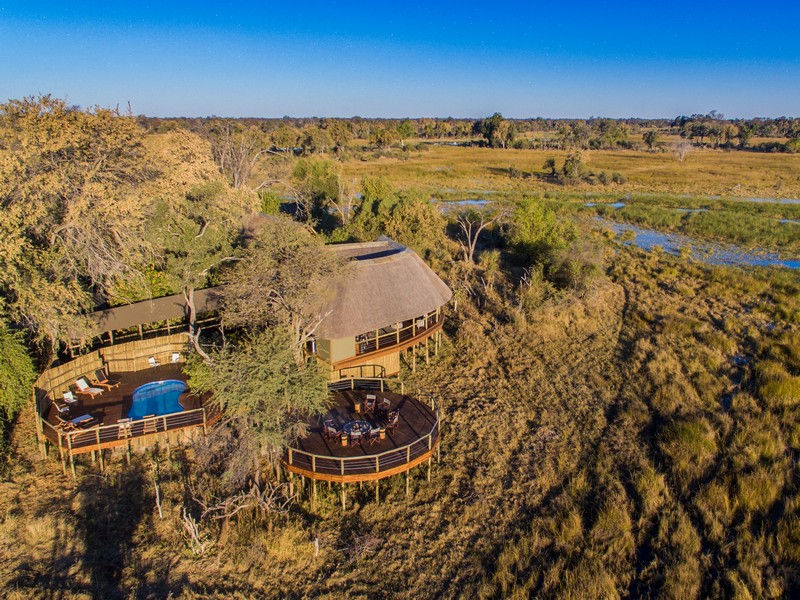
Botswana is one of Africa’s classic flying-safari destinations. The country’s remote camps and huge wilderness areas make light aircraft an essential part of many itineraries. You might fly from Maun into the Okavango Delta, landing on a remote airstrip surrounded by wilderness. From there, you can connect by air to another camp in the Delta, the Linyanti, Chobe or Makgadikgadi.
Flying over the Okavango Delta
The flight itself can be spectacular.
From above, the Delta’s waterways form an extraordinary pattern across the landscape.
Depending on the season and conditions, you may see:
-
Hippos
-
Antelope
-
Wildlife trails
-
Floodplains
-
Islands
-
Channels
-
Herds moving across open ground
It provides a completely different perspective on the ecosystem. Then, minutes later, you’re on the ground experiencing it at eye level.
Flying Safaris in Zambia
Fly deep into the wilderness.
Zambia’s remote safari areas are ideally suited to flying safaris.
You can connect destinations such as:
-
Other remote safari areas
Flying allows you to combine several ecosystems without spending entire days travelling by road. For travellers who want a more adventurous safari, Zambia can be particularly rewarding when combined with walking and river-based activities.
Flying Safaris in Zimbabwe
Remote wilderness made accessible.
Zimbabwe’s major safari areas can also be connected by light aircraft.
A flying itinerary might combine:
Victoria Falls → Hwange → Mana Pools
Each destination provides a very different experience.
-
Victoria Falls brings the Zambezi and one of Africa’s great natural wonders.
-
Hwange offers expansive wildlife country.
-
Mana Pools provides extraordinary opportunities for walking, canoeing and exploring the Zambezi wilderness.
Flying makes this kind of itinerary practical without lengthy road transfers between every destination.
Flying Safaris in Kenya
Fly between conservancies.
Kenya has an extensive network of safari airstrips.
Flying can be particularly useful when combining Nairobi with remote conservancies and the Maasai Mara. Instead of spending several hours travelling by road, you can fly directly towards the wilderness.
A typical journey might be:
Nairobi → Maasai Mara → Laikipia → Lamu
or:
Nairobi → Greater Maasai Mara → Samburu → Tsavo
The exact routing depends on the camps and airstrips used.
The Maasai Mara from the air
Arriving by air in the Mara is part of the experience.
You descend over the grasslands, looking down at the landscape where vast herds move with the seasons.
Your safari vehicle is often waiting near the airstrip.
There is little wasted time.
You can potentially be on your first game drive shortly after landing.
Flying Safaris in Tanzania
From the Serengeti to the coast.
Tanzania’s size makes flying particularly valuable.
A flying safari can connect:
-
Arusha
-
Selous/Nyerere
Instead of returning to a central airport between each safari area, you can often fly between remote airstrips.
This makes it possible to combine several very different ecosystems within a single itinerary.
Flying Safaris in Namibia
Vast distances, made easier.
Namibia is one of the clearest examples of where flying can transform an itinerary. The country is enormous.
Destinations such as:
-
Kaokoveld
can involve substantial driving distances.
A fly-in itinerary can dramatically reduce those road journeys. And the aerial views are extraordinary. From above, Namibia’s desert landscapes become enormous patterns of colour, dunes and mountains.
Flying Safaris in South Africa
Fly efficiently between regions.
South Africa has a highly developed aviation network, making it relatively easy to combine safari with other parts of the country.
A journey might include:
Cape Town → Winelands → Greater Kruger
or:
Johannesburg → Greater Kruger → Victoria Falls
Flying can also make it easier to connect a safari with the Garden Route, KwaZulu-Natal or other destinations.
Flying Safaris in Mozambique
Fly to the beach.
Flying is particularly useful when combining a safari with Mozambique’s remote coastal and island destinations.
After several days in the bush, you can fly towards the Indian Ocean and exchange game drives for:
-
Diving
-
Snorkelling
-
Sailing
-
Fishing
-
Beach time
The combination of safari + Mozambique is one of the easiest ways to create a dramatic change of pace within one holiday.


Scenic Flights
Not every flight needs to be simply a transfer.
In some destinations, you can arrange scenic or sightseeing flights specifically to experience the landscape from above.
These can include:
-
Okavango Delta
-
Cape landscapes
-
Other wilderness areas
Depending on the aircraft and operator, flights can range from short aerial experiences to longer excursions.
A scenic flight can be particularly worthwhile when the landscape itself is the attraction.
Helicopter flights
For travellers looking for something more exclusive, helicopter experiences can provide a completely different perspective.
Helicopters can operate from locations where fixed-wing aircraft cannot and can offer more flexibility for sightseeing.
Possible experiences may include:
-
Scenic flights
-
Mountain landscapes
-
Coastal scenery
-
Victoria Falls
-
Desert landscapes
-
Wilderness flightseeing
Availability varies significantly by destination and operator.
The view from above
-
There is a moment on almost every flying safari when the journey becomes part of the holiday.
-
You look down and realise just how enormous Africa is.
-
A river winds through woodland.
-
An elephant walks beside a waterhole.
-
A herd of antelope forms a tiny moving pattern on the plain.
-
The desert stretches towards the horizon.
-
And somewhere below, your safari camp is waiting.
-
A few minutes later, the aircraft lands.
-
The engine stops.
-
The door opens.
-
And you step straight into the wilderness.
Is flying on safari safe?
Safari aviation is an established part of travel in many African countries. The aircraft are operated by specialist aviation companies and experienced pilots familiar with bush airstrips and regional conditions.
As with all aviation, however, there are inherent risks.
-
Weather can affect flight schedules.
-
Airstrips can be remote.
-
Aircraft and luggage restrictions apply.
-
Flights can also be delayed or rerouted for operational or weather-related reasons.
We therefore build itineraries with appropriate flexibility rather than relying on unrealistic connection times.
What are bush airstrips like?
This surprises many first-time safari travellers. A bush airstrip may simply be a cleared section of ground.
There may be:
-
No terminal
-
No security queue
-
No baggage carousel
-
No shops
-
No airport lounge
Your safari vehicle may be waiting just a few metres from where you land. The simplicity is part of the experience. You haven’t merely arrived at a safari lodge. You’ve landed in the wilderness.
Flying safari and luggage
Because this is so important, we’ll always explain the baggage requirements before departure.
Expect some flying-safari itineraries to require:
-
Soft-sided luggage
-
Strict weight limits
-
Limited luggage volume
If your itinerary includes both city and safari hotels, we can often arrange a solution so you don’t need to carry everything into the bush. This is particularly useful on longer trips.
Flying with children
Flying safaris can be excellent for families because they reduce long road journeys. However, some aircraft and routes have specific restrictions relating to:
-
Children’s ages
-
Passenger numbers
-
Aircraft type
-
Seating
-
Weight
-
Baggage
We’ll check the specific requirements for your itinerary.
For families, the aerial arrival into a safari camp can also be an adventure in itself.

Flying safari versus driving safari
Both have advantages.
Fly
Best for:
-
Remote camps
-
Covering large distances
-
Multi-country itineraries
-
Maximising safari time
-
Luxury and convenience
-
Combining very different destinations
Drive
Best for:
-
Road-trip experiences
-
Scenic journeys
-
Flexible stops
-
Exploring areas between destinations
-
Travellers who enjoy the journey itself
The best option?
Often, a combination.
You can fly between major safari regions and then explore locally by vehicle.
That gives you the efficiency of flying without losing the pleasure of travelling overland.
Africa is too big to rush
A flying safari isn’t simply about luxury.
It is about access.
Access to remote wilderness.
Access to places that would otherwise take a full day to reach.
Access to multiple ecosystems within one journey.
And most importantly, access to more time experiencing the Africa you came to see.
We’ll design the flights around your safari, not the other way around.
Fly further. See more. Spend less time on the road.
Your African adventure starts the moment you take to the skies.