_edited.png)

Game Drives in Africa
The Classic Safari Experience
A game drive is one of the great pleasures of an African safari.
As the sun rises over the savannah, your guide starts the engine and you head into the wilderness in search of elephants, lions, leopards, rhinos, buffalo and everything else that makes Africa so extraordinary.
But a game drive in the Okavango Delta is not necessarily the same experience as one in the Maasai Mara. A vehicle used in a South African private reserve can be very different from one used in Kenya, while a national park may have completely different rules from a private concession.
At Mopani Safaris, we arrange game drives across Botswana, Kenya, Namibia, South Africa, Tanzania, Zambia and Zimbabwe, so the vehicle and style of game viewing will depend on where your safari takes you.
Here’s what you can expect.


What type of safari vehicle will I be in?
There is no single “African safari vehicle”.
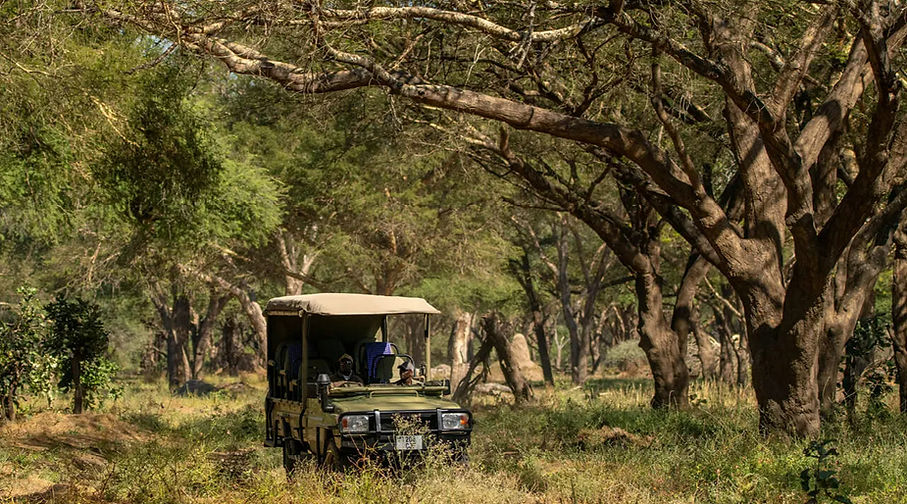
The most common vehicles are specially adapted 4x4 game-viewing vehicles, usually based on Toyota Land Cruiser or Land Rover platforms. They are designed to cope with rough tracks while giving passengers excellent visibility.
Depending on the destination, you may find:
-
Open-sided 4x4 safari vehicles
-
Open 4x4s with canvas or removable roofs
-
Pop-top vehicles
-
Closed or partially enclosed 4x4s
-
Larger safari vehicles in some national parks
-
Specialist photographic vehicles
-
Private vehicles for exclusive game drives
The vehicle is chosen for the environment as much as for comfort.
In a private concession where off-road tracking is permitted, an open-sided 4x4 gives you exceptional visibility and allows the guide and tracker to work together closely.
In a national park where vehicles must remain on designated roads, a different style of vehicle may be more appropriate.

South Africa: open 4x4s & the famous tracker seat
If you’re looking for the classic guide-and-tracker safari experience, South Africa’s private reserves are among the best places to experience it. This is particularly true in the Greater Kruger, including areas such as Sabi Sands, Timbavati and other private reserves.
Game drives commonly take place in specially adapted open-sided 4x4s with raised, tiered seating.
The vehicle normally carries:
-
A professional guide/ranger
-
A dedicated tracker
-
Around 6–9 guests, depending on the lodge and vehicle
-
Sometimes fewer when a private vehicle has been booked
Many of Mopani’s properties aim for smaller vehicle groups, and specific camps can guarantee a window seat with a maximum of six guests.
What is the tracker seat?
One of the distinctive features of a South African private-reserve safari is the tracker seat. The tracker sits on a dedicated seat mounted at the front of the vehicle, usually over or just ahead of the bonnet. From this position, the tracker has an unobstructed view of the road and surrounding bush and can look for the tiny clues that most visitors would never notice:
-
Paw prints
-
Broken branches
-
Disturbed vegetation
-
Dung
-
Drag marks
-
Alarm calls
-
Changes in animal behaviour
Tracking is a genuine skill. An experienced tracker can establish not only what animal has passed through an area, but also how recently it passed and where it may have gone.
The tracker and guide work as a team: the tracker reads the bush, while the guide drives, interprets animal behaviour, manages the sighting and looks after the guests.
Is the tracker seat safe?
Yes - when it is a designated seat operated within the safari operator’s safety procedures. It can look surprisingly exposed to a first-time visitor, but the tracker is not simply sitting on the bonnet without protection or purpose. The position is specifically designed for the tracker to work from, and experienced trackers use it routinely.
For guests, however, the important distinction is that the tracker seat is normally a working position for the trained tracker, not an extra passenger seat. Guests should remain in their allocated seats and follow the guide’s instructions at all times. You should never climb onto the bonnet, stand up or move around the vehicle to imitate the tracker.
The vehicle itself is treated as one unit by the wildlife, while the guide and tracker are trained to read animal behaviour and maintain an appropriate distance. Good safari practice is always about respecting the animal rather than relying on the vehicle to make you safe.
As with any wildlife experience, there is an element of inherent risk. Your guide’s instructions are there for a reason, particularly when you are close to elephants, lions, buffalo or other potentially dangerous animals.
Why South Africa is particularly good for tracking
Private reserves in the Greater Kruger offer something that can be difficult to replicate in national parks: the ability, where regulations permit, to leave established roads and follow tracks into the bush. This can transform a sighting. Rather than simply driving along a road hoping to encounter an animal, the guide and tracker can sometimes follow a fresh leopard trail or investigate tracks left by lions during the night.
Mopani’s Greater Kruger properties include areas renowned for this style of guided wildlife viewing, while properties such as those in Sabi Sands are particularly well known for leopard sightings.

Botswana: open vehicles, off-road tracking & small groups
Botswana offers some of Africa’s finest game-driving experiences, particularly in private concessions of the Okavango Delta, Chobe, Linyanti and surrounding wilderness areas.
The typical vehicle is an open-sided 4x4 safari vehicle with raised seating.
Many Botswana camps operate with six guests per vehicle, giving everyone a good view and plenty of space for photography.
For example, Mopani’s Rra Dinare and several Machaba properties specify a maximum of six guests for a guaranteed window seat. Some properties can also arrange a private safari vehicle, normally at an additional cost.
Off-road game viewing
One of the great advantages of certain Botswana private concessions is the ability to drive off-road when conditions and regulations permit. This is particularly valuable when following predators. Instead of being restricted to the road, your guide may be able to position the vehicle closer to the action or follow tracks across the bush.
Not every Botswana safari allows this, however. For example, national parks such as Nxai Pan operate under different regulations, and Mopani’s information for Nxai Pan specifically notes that off-road driving is not permitted. This is one of the reasons why it is worth asking which concession or park your camp is in, rather than simply assuming that every Botswana safari operates in the same way.

Kenya: pop-up vehicles & expansive landscapes
Kenya’s safari vehicles can look quite different from those found in the private reserves of South Africa.
In destinations such as the Maasai Mara, you may encounter both specially adapted 4x4s and vehicles with a pop-top roof.
The roof can be opened or raised to give passengers a much better view of the surrounding plains and an excellent position for photography.
Kenyan safari vehicles are particularly well suited to the open landscapes of the Mara, where you may spend long periods watching elephants, lions, cheetahs or wildebeest across the grasslands.
The exact vehicle and passenger configuration depends on the camp, safari operator and whether you are travelling privately or as part of a small group.
For photographers, we can also look specifically for camps and vehicles designed around photography rather than simply accepting the standard vehicle allocation.


Tanzania: classic 4 x 4 safari vehicles
Tanzania’s major safari destinations - including the Serengeti and Ngorongoro Conservation Area - generally use specially adapted 4x4 safari vehicles.
These are often enclosed or partially enclosed vehicles with large windows and/or a pop-up roof, depending on the operator and location. They are particularly suited to Tanzania’s long-distance game viewing, where you may spend much of the day travelling across huge landscapes.
In the Serengeti, the sheer scale of the ecosystem means that a comfortable vehicle and an experienced guide are just as important as the wildlife itself. The vehicle also needs to cope with everything from rough tracks to muddy conditions during the rains.


Zambia & Zimbabwe: wilderness-style game drives
Game drives in Zambia and Zimbabwe tend to have a wonderfully adventurous feel.
Destinations such as South Luangwa, Lower Zambezi, Hwange and Mana Pools combine classic 4x4 game drives with opportunities for walking and, in some locations, boating or canoeing.
Vehicles are generally open or partially open 4x4 safari vehicles, with the exact configuration determined by the camp and area.
These destinations are particularly appealing if you want your safari to feel less like simply “looking for the Big Five” and more like exploring a functioning wilderness.
In Mana Pools, for example, game viewing may be combined with walking and other specialist activities, while Zambia’s Luangwa Valley is particularly famous for its walking-safari tradition.
Namibia: a different style of game drive
Namibia’s landscapes are very different from the lush floodplains of Botswana or the woodland of the Kruger.
In areas such as Etosha National Park, game drives generally take place on established roads, and vehicles can therefore be more enclosed than those used in private concessions.
The environment is open and arid, with excellent visibility around waterholes.
This means that the vehicle is only part of the experience. In Etosha, knowing which waterhole to visit and when can be just as important as having an open vehicle.
In more remote Namibian concessions, the vehicle configuration can vary considerably depending on the camp and the nature of the safari.

National Park or Private Reserve: Why does it matter?
This is one of the most important things to understand when choosing a safari.
National parks
National parks generally operate under stricter rules. Vehicles may be required to remain on designated roads, and there may be restrictions on:
-
Off-road driving
-
Night drives
-
Number of vehicles at sightings
-
Where vehicles can stop
-
How close vehicles can approach wildlife
The advantage is that these enormous protected landscapes can contain extraordinary wildlife populations.
Private reserves and concessions
Private reserves can offer a more flexible safari experience. Depending on the specific reserve and its rules, you may have:
-
Off-road tracking
-
Fewer vehicles
-
More flexibility around sightings
-
Specialist guide-and-tracker teams
-
Private vehicles
-
More intimate vehicle groups
Mopani’s Botswana properties demonstrate this difference clearly: several private-concession camps offer off-road tracking and night drives, while national-park properties operate under more restrictive rules.
What is the best seat in a safari vehicle?
There isn’t necessarily one “best” seat. The ideal position depends on what matters most to you.
Front passenger row
Great for:
-
Talking to the guide
-
Watching the guide and tracker work
-
Asking questions
-
Getting a good forward view
Middle rows
Often offer an excellent combination of visibility and comfort.
Raised rear seats
Can give you a superb elevated view over the heads of other passengers and the surrounding vegetation.
Tracker seat
The dedicated tracker seat can offer an extraordinary perspective of the bush, but it is a professional working position and is not normally available for guests. If you want the closest experience to this viewpoint, the best alternative is to request a front passenger position when arranging your safari.

Photography & Game Drives in Africa
The best safari vehicles are designed with photography in mind.
Many have:
-
Raised seating
-
Open sides
-
Beanbag supports
-
Space between passengers
-
Adjustable armrests
-
Camera-friendly positioning
Some Mopani properties specifically provide photographic beanbag supports, while others have enhanced vehicle features designed to make long photography sessions more comfortable. If photography is your priority, tell us before booking. We can look for a safari where the vehicle, passenger numbers, guide and location all work in your favour.
What should I expect on game drives in Africa?
A typical day might begin before sunrise.
You’ll climb into the vehicle while the bush is still cool and quiet and set off with your guide. The first hour can be magical.
The temperature is comfortable, nocturnal animals may still be active, and predators such as lions, leopards and wild dogs can be on the move.
Then the pace changes!
-
You might spend twenty minutes watching a herd of elephants.
-
You might spend an hour tracking a leopard.
-
You might stop because your guide has spotted a tiny movement in the grass that turns out to be a serval.
-
Or you might drive for some time without seeing a large animal at all.
That is safari.The excitement comes from not knowing what is around the next corner.
And when you find an animal?
-
Your guide will position the vehicle carefully.
-
The engine may be switched off.
-
Everyone becomes quiet.
-
The animal may look at you for a moment and then simply carry on with its day.
This is where an experienced guide and tracker make such a difference. They understand animal behaviour and know when to approach, when to wait and when to leave. Your safety and the welfare of the animal always come first.
Guests should remain seated, keep arms and legs inside the vehicle and follow the guide’s instructions. Never call, whistle at or attempt to attract an animal’s attention.


Private Vehicles: Is it worth it?
For many travellers, absolutely.
A private vehicle means you are not sharing your game drives with other guests.
You can generally:
-
Choose your departure times
-
Spend longer at sightings
-
Stop for photography when you want
-
Follow your own interests
-
Avoid having to accommodate another guest’s preferences
-
Have more room for camera equipment
-
Request particular seats
-
Enjoy a more personal relationship with your guide
Private vehicles are available at selected Mopani properties, subject to availability and usually at an additional cost.
They are particularly worthwhile for families, photographers, honeymooners and serious wildlife enthusiasts.