_edited.png)

South Africa
The Kruger National Park
Kruger National park - The Heart of South African Safari
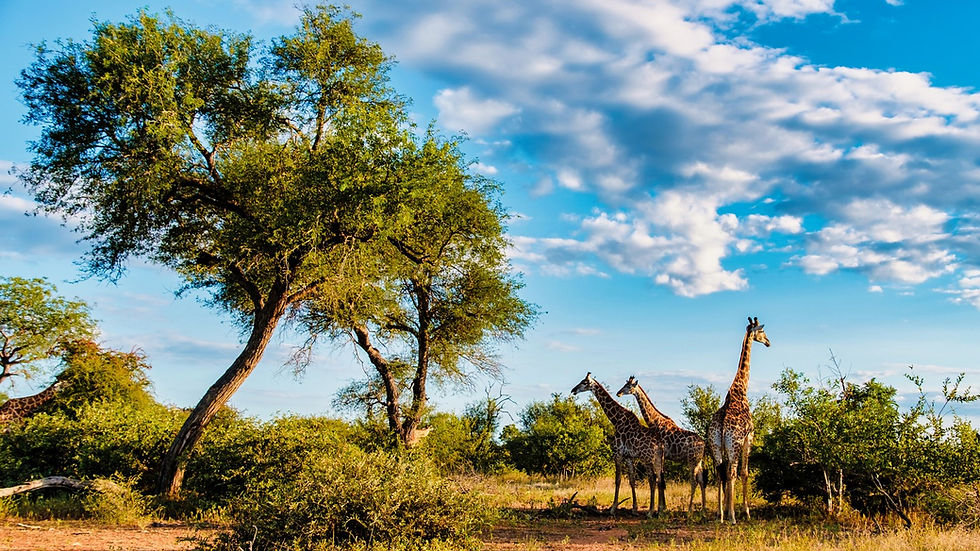
Spanning nearly 20,000 square kms, Kruger National Park is one of the largest and most celebrated game reserves in Africa; a place where wild Africa still roams free. With unmatched biodiversity, world-renowned Big Five sightings, and a landscape ranging from open savannah to riverine forest, Kruger is the beating heart of South Africa’s safari heritage.
Whether you’re self-driving through vast, wildlife-rich plains, staying in a private lodge on a private concession, or waking up to the sounds of lions calling at dawn - Kruger offers a safari for every style and every soul.
This is where lifelong wildlife dreams come to life.


The Kruger - A South Africa Safari for Everyone
Kruger’s diversity of experiences and accommodations is one of its greatest strengths:
Luxury Private Concessions: Located within Kruger itself, these exclusive lodges offer high-end guiding, gourmet dining, and intimate wildlife experiences.
Classic Safari Lodges: Mid-range lodges with game drives, walking safaris, and warm bush hospitality.
Self-Catering Rest Camps: Managed by SANParks and ideal for independent travellers and families.
Tented Bush Camps: Rustic yet comfortable, offering immersion in nature with no frills.
Private Villas & Family Suites: Perfect for multi-generational safaris or private groups.
From fully serviced luxury to authentic self-drive adventures, Kruger caters to every type of traveller - all within one of Africa’s most iconic ecosystems.
See our Safari Lodges & Camps in
The Kruger National Park


Kruger Experiences & Wildlife Highlights
Kruger offers some of the best wildlife viewing on the continent, with excellent sightings year-round:
Big Five Safaris: Lion, leopard, rhino, elephant, and buffalo, often spotted in a single drive.
Self-Drive Freedom: Explore at your own pace with well-maintained roads and detailed park maps.
Guided Game Drives & Walks: Led by expert rangers in open vehicles or on foot.
Photographic Safaris: Specialist guides and custom vehicles available in private concessions.
Birdwatching Paradise: Over 500 species, including raptors, waterbirds, and summer migrants.
Night Drives: See Kruger’s nocturnal life, from civets to hyenas to bush babies.
Cultural Heritage: Visit archaeological sites like Thulamela and Masorini.
Kruger isn’t just a place to see wildlife - it’s a place to connect deeply with nature’s rhythm.
The Kruger Landscape
Kruger’s diverse landscapes support an incredible array of species and scenery:
Open Grasslands & Mopane Woodlands: Ideal for spotting big cats and large herbivores.
River Systems: The Sabie, Letaba, and Olifants Rivers attract hippos, crocodiles, elephants, and birdlife.
Mountainous Northern Regions: Remote and rugged, perfect for off-the-beaten-path adventures.
Private Concessions: Offer limited vehicle access and lower guest numbers for exclusive experiences.
Whether you choose the north for solitude, the central region for predators, or the south for high-density game, Kruger delivers authentic African wilderness.


How to get here:
Kruger is highly accessible with both road and air connections from major cities and international hubs.
From Johannesburg
By Air: Daily flights to Skukuza, Nelspruit (KMIA), and Hoedspruit (approx. 1–1.5 hours).
By Road: 4.5–6 hour drive depending on your gate of entry; ideal for road trippers or transfers.
From Cape Town
By Air: Daily flights to Skukuza, Nelspruit, and Hoedspruit (approx. 2.5–3 hours).
By Road: Not practical for direct driving, best reached by flying or combining with a Garden Route–to–Kruger itinerary.
From London
Fly to Johannesburg (approx. 11–12 hours), then connect via domestic flight or transfer to Kruger.
From Dubai
Direct flights to Johannesburg (approx. 8 hours), followed by onward domestic flight to Kruger-area airports.
From New York
Flights via Johannesburg, Doha, or European hubs (approx. 18–20 hours total), with onward travel to Kruger by air or road.
When is the best time to visit The Kruger?
The best time to visit Kruger National Park is during the dry winter months, May to September.
Why May–September is Ideal: Dry Season: Rainfall is minimal, so roads are easier to navigate and trails are less muddy. Wildlife Spotting: Animals concentrate around waterholes and rivers, making it easier to see the Big Five (lion, leopard, elephant, buffalo, rhino) and other species. Cooler Temperatures: Daytime temperatures are comfortable (20–26°C / 68–79°F), and nights can be cool (around 10°C / 50°F). Fewer Insects: Mosquito activity is lower, reducing malaria risk in some regions.
Wet Season – October to April: Pros: Lush, green landscapes and dramatic skies. Excellent for birdwatching - migratory species arrive during summer. Calving season for many animals, offering chances to see young wildlife. Cons: Hot and humid (30–35°C / 86–95°F), making safaris more tiring. Wildlife is more dispersed due to abundant water, so sightings may be less predictable. Heavy rains can make some roads muddy or temporarily inaccessible.
Summary:
Best Overall: May–September (dry, cooler, and easier for spotting wildlife) Alternative: November–March for lush landscapes, birding, and seeing newborn animals, but expect heat and rain
Can I see the The Big Five in The Kruger?
Yes - The Kruger National Park is one of the best places in Africa to see the Big Five (lion, leopard, elephant, buffalo, and rhinoceros), along with a huge variety of other wildlife. Sightings are frequent because the park is vast (over 19,000 km²) and well-protected.
Big Five in Kruger:
Lion: Common in open savannah and woodland areas.
Leopard: Elusive, but Kruger has a high density; best seen early morning or late afternoon.
Elephant: Large herds roam the park, especially near rivers and waterholes.
Buffalo: Large herds, often near water and grasslands.
Rhinoceros: Both black and white rhinos are present; spotting is easier in the southern regions of the park.
Other Notable Wildlife: Predators:
Cheetah
African wild dog (endangered, rare, mostly in southern Kruger)
Hyena Jackal Ungulates / Antelope Impala, kudu, bushbuck, waterbuck, eland, sable, and gemsbok
Hippo and crocodile in rivers and waterholes
Birds: Over 500 species recorded, including fish eagles, vultures, and lilac-breasted rollers Migratory and rare species like Pel’s fishing owl and Martial eagle
Reptiles & Other Species: Nile crocodile Monitor lizards, tortoises, and a variety of snakes
Tips for Maximizing Sightings:
Guided safaris with experienced rangers are the best way to find leopards, wild dogs, and other elusive species. Early morning and late afternoon game drives offer the best chance for predator sightings. Stay multiple nights in different regions (south, central, north) to experience a variety of habitats and wildlife. Dry winter months (May–September) increase chances of seeing large gatherings at waterholes.
Kruger National Park is ideal not only for the Big Five but also for rare and endangered species, like African wild dogs, pangolins, and black rhinos, making it one of Africa’s top wildlife destinations.
Is The Kruger expensive?
Yes - visiting The Kruger National Park can range from budget-friendly to premium, depending on whether you stay in park-run camps or private lodges.
1. Kruger National Park Accommodation:
Budget / Self-Catering: Rest camps managed by SANParks: Skukuza, Lower Sabie, Satara, and others. Dorms, rondavels, or camping: $20–$60 per person per night. Good option for self-drive safaris.
Mid-Range: Standard bungalows or cottages in SANParks camps: $70–$150 per person per night. Includes basic facilities, some with kitchens; still self-drive for safaris.
Luxury / Private Lodges: Private lodges inside or near Kruger: $400–$1,200+ per person per night. Includes all meals, guided game drives, and high-end amenities.
2. Safari & Activity Costs:
Park Entrance Fees: $25–$35 per adult per day (may vary by season).
Guided Game Drives / Walking Safaris: Additional $50–$200 per person for lodge-based safaris.
Self-Drive Safaris: Minimal extra cost beyond accommodation, fuel, and park fees.
3. Seasonal Factors:
Peak Season (May–September / dry winter): Higher demand and prices, especially in private lodges. Off-Peak (Nov–Mar / wet season): Some SANParks rates are slightly cheaper, but private lodges remain expensive.
Tip: Self-drive and SANParks camps are excellent for budget travelers wanting authentic safari experiences. Private lodges offer more comfort, guaranteed Big Five sightings, and professional guides but come at a premium.
Is The Kruger safe?
Yes - The Kruger National Park is very safe for tourists, provided you follow standard park rules and safari guidelines.
Safety Overview:
Wildlife Safety: The main risk comes from wild animals - lions, elephants, rhinos, leopards, and buffalo. Visitors must stay in vehicles in public roads and designated areas unless accompanied by a trained guide. Guided safaris are the safest way to see predators and dangerous animals up close.
Crime: Crime against tourists inside the park is extremely rare. Standard precautions: lock vehicles, don’t leave valuables unattended, and use lodge safes. Incidents are more likely outside the park in nearby towns than inside Kruger itself.
Environmental & Health Safety: Heat in summer months (October–March) can be intense; carry water, sun protection, and insect repellent. Malaria risk exists in many areas of the park; prophylaxis is recommended. Roads inside the park can be gravel or uneven; drive carefully.
Tips for Safe Travel in Kruger: Always follow SANParks rules for driving, camping, and wildlife encounters. Use trained guides for walking safaris or night drives. Keep a safe distance from wildlife and do not attempt to feed or approach animals. Carry water, sunscreen, and insect repellent.
Overall: Kruger National Park is one of the safest safari destinations in Africa due to strict park management, trained staff, and visitor regulations. Most safety concerns are wildlife and environmental hazards, not crime.
What are additional activities in The Kruger?
In The Kruger National Park, the main draw is wildlife viewing, but there are several other activities to enhance your safari experience beyond the Big Five. Most activities are focused on nature, photography, and education.
1. Game Drives: Self-drive safaris: Explore the park at your own pace; ideal for photographers and budget travelers. Guided morning and evening drives: Professional rangers and trackers increase your chances of seeing predators, nocturnal species, and rare wildlife.
2. Walking Safaris: Accompanied by armed rangers for safety. Learn about tracks, animal behaviour, bush survival, and plant life. Provides a closer experience with nature than a vehicle-based safari.
3. Birdwatching: Over 500 species recorded in Kruger. Look for raptors (eagles, hawks), kingfishers, hornbills, and migratory birds. Early morning and late afternoon are the best times for birding.
4. Night Drives: Guided safaris after dark to spot nocturnal species like leopards, hyenas, bush babies, civets, and porcupines. Only allowed with trained guides.
5. Photography & Nature Observation: Capture Big Five, predators, herds of elephants, or landscapes at dawn and dusk. Some lodges offer photography safaris with expert guides. Sunrise and sunset provide the best light for dramatic photos.
6. Camping & Bush Experiences: Stay at SANParks rest camps or bush camps for a more immersive experience. Enjoy braais (barbecues) under the stars, guided campfires, and stargazing.
7. Educational & Conservation Activities: Some lodges and camps offer talks about conservation, wildlife tracking, and anti-poaching efforts. Participate in ranger-led walks to learn about ecosystems and animal behaviour.
Summary of Activities in Kruger:
- Safari: Self-drive, guided morning/evening drives
- Walking Safari: Bush skills, tracking, close wildlife observation
- Birdwatching: Resident and migratory species
- Night Drives: Nocturnal wildlife
- Photography & Nature: Landscapes, predators, Big Five
- Camping & Bush Experience: Immersive stays, stargazing, campfires - Conservation & Educational Programs: Talks and guided walks
And Finally...
Kruger isn’t just South Africa’s most famous park - it’s an institution, a rite of passage, and a bucket-list destination for safari lovers around the world. Whether you're a first-time visitor or a seasoned wildlife enthusiast, Kruger offers something new with every sunrise.
This is a place of ancient rhythms, untamed beauty, and unforgettable encounters. A place where the wild still rules, and you are simply a respectful observer in its domain.
Kruger National Park, South Africa... The Soul of Safari. The Spirit of Africa.